Group Show
EXHIBITIONISTA: 37th Annual Northern National Art Competition
I am thrilled to show, “Hopes and Fears and…” in this exhibition at the Nicolet College Art Gallery !

24.5 x 16.25″, textile samples, linen thread
The 37th Northern National Art Competition will be held in Rhinelander, Wisconsin, from June 13 – July 27, 2024, at the Nicolet College Art Gallery. Began in 1987, this show is a cooperative venture between Nicolet College Arts & Enrichment and the Northern Arts Council (NAC). The Northern National Art Competition strives to showcase a cross section of contemporary art in a variety of two-dimensional mediums. Each year, hundreds of artists nationwide submit work to be considered for inclusion in this exhibition, and the art is always both visually exciting and intellectually stimulating.
View the show!
CURATORIAL STATEMENT
Many people wonder what goes on in the selection process of a juror for an art competition. I suspect that most of the work to which a juror responds resonates with that person for a variety of reasons, and yet we are all programmed with certain pre-dispositions.
The numerous entries for the Northern National competition represented a huge range of work with about two-thirds being representational. My eye moved toward work in diverse media, work that had texture, and anything that found a way to address current environmental or global concerns with a certain indirectness.
I like to get a sense of both the pleasure and struggle in an art-making process. When an artist seems to reach, experiment, and allow their work to be less buttoned-up or seamlessly complete, it becomes infused with energy. Drawing, painting, and photography have dominated our realm for a long time. There is still much to be explored in these areas. But in the past decade or less, textiles and fiber art have fully entered into the contemporary art world, bringing a freshness of exploration and a reevaluation of histories. We can now look to craft traditions around the world and contemplate how they inspired later art movements, or how the domestic work and pastimes of women actually parallel the fine arts world more closely than we had previously allowed. We are in a time of diversification in the art world, where artists of color, women, and LBGTQ artists are addressing important issues of identity, cultural oppression, and the occlusions of history. And while this is going in, it is prying open ways of seeing the world and providing access to more means of expression to discuss pertinent issues.
The art world has never been better or more confused than it is now. We are called upon to think more broadly. If you are a landscape artist making beautiful watercolor paintings of rivers and fields, can you push your thinking? Can you ask yourself hard questions? Why am I making this? What does it mean? More importantly, what does it mean now, in the context of this era?
If you are a photographer seeking beauty in the sky or national parks, is there a way to address both the beauty and the dire needs of land conservancy and resource protection? Not all art needs to be political. But it should have a tug. It should nudge the viewer toward curiosity and wonder.”
Debra Brehmer
View the show!
EXHIBITIONISTA: PULP: BOOK & PAPER ARTS
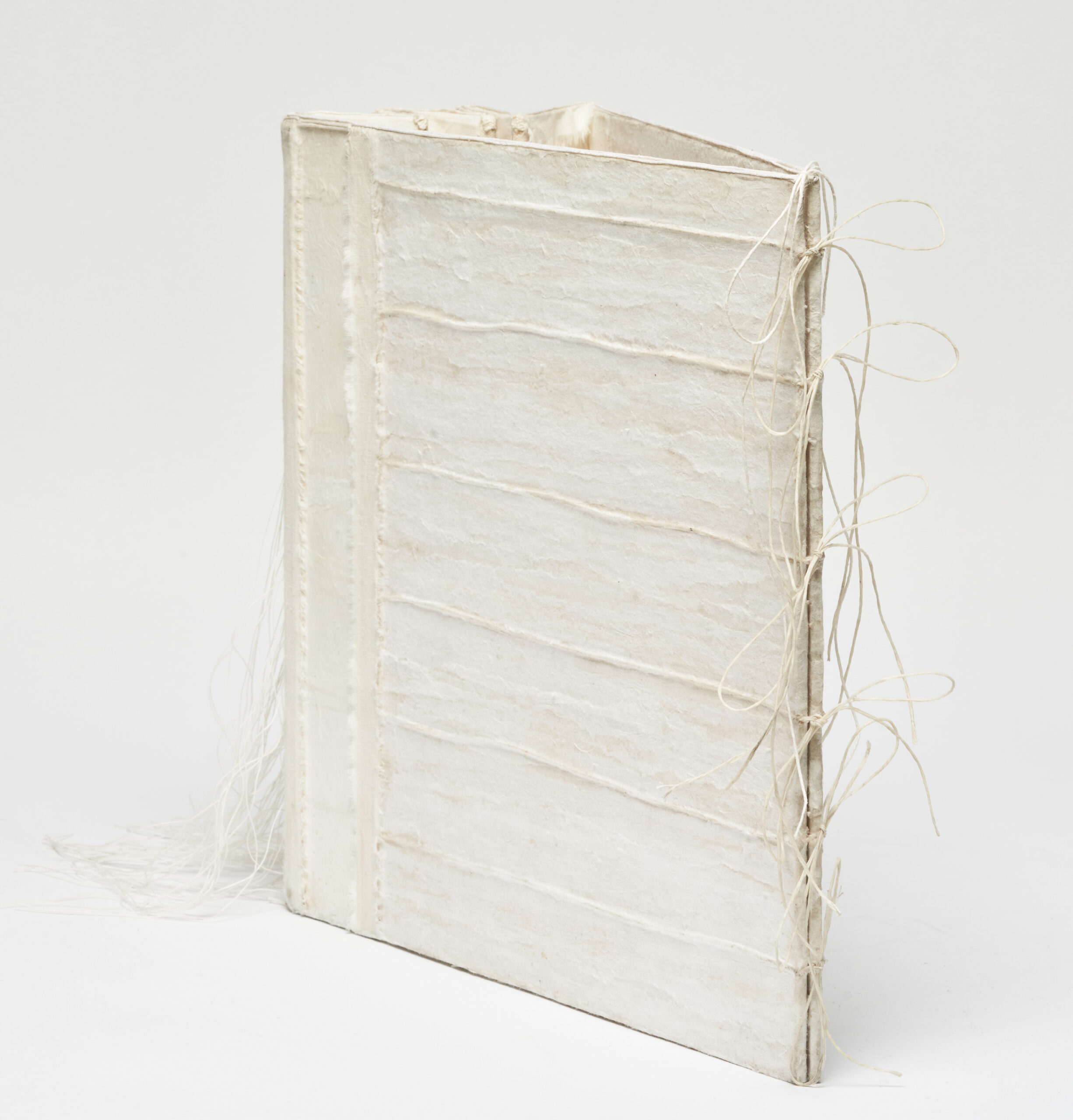
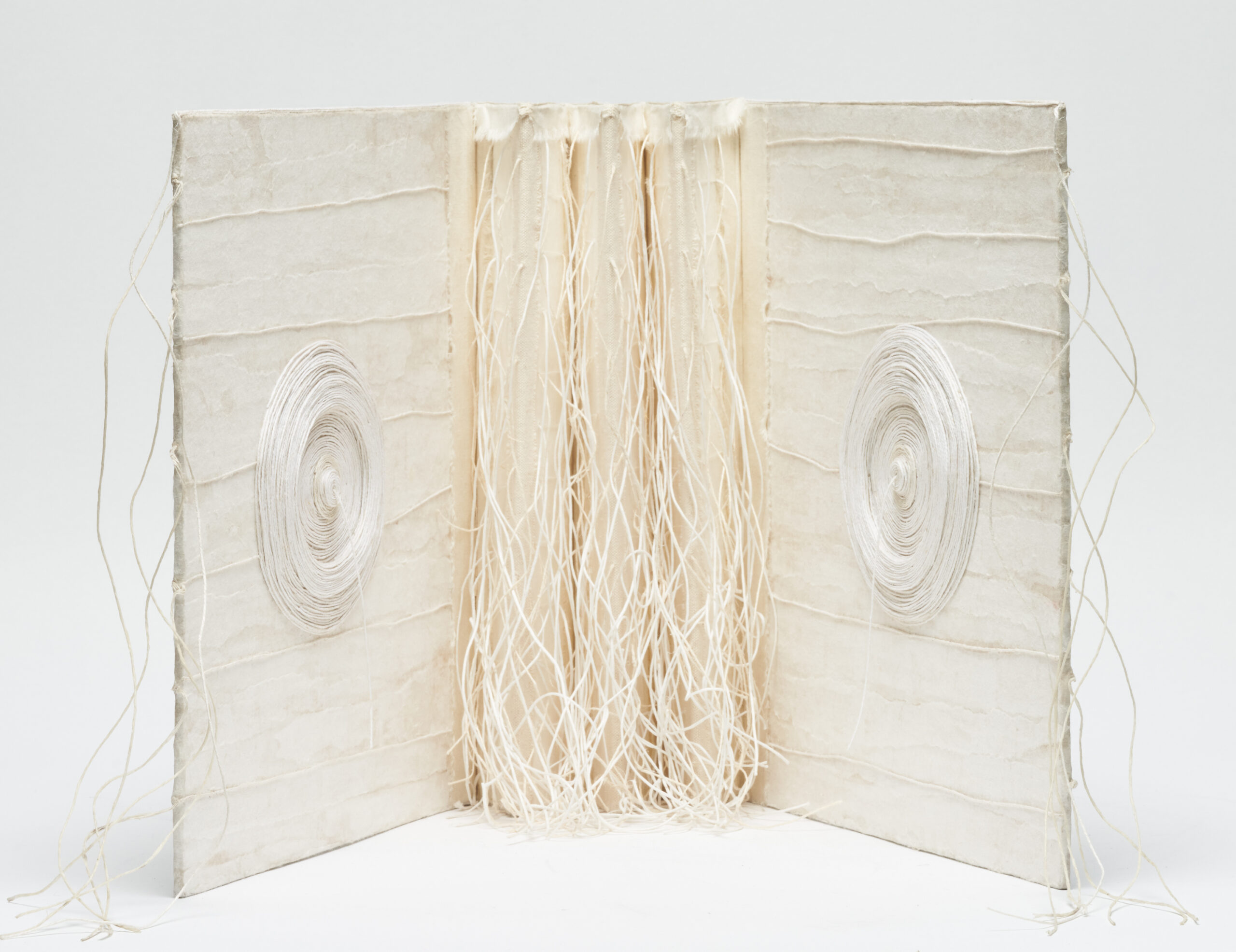
I am thrilled to participate for the second time in:
PULP: Book & Paper Arts
Book Arts: Handmade artist’s books or book art objects, showing excellence in bookmaking or altered book techniques, including books made of any medium (not just paper), as well as the art & craft of letterpress printing, bookbinding, book art sculptures, etc.
Paper Arts: including innovative or traditional explorations of paper sculpture, papermaking, etc.
The Sebastopol Center for the Arts is one of the most vibrant arts organizations in Northern, California. Since 1988 it has engaged and inspired the community through presentations of contemporary art, music, dance, film, and literary events. Through classes and workshops it strives to educate and deepen the interest in the arts for adults, teens and children. The Center is located in a 17,800 square foot building in downtown Sebastopol where it offers a large variety of arts programs and is a creative force in California. Sebastopol, located 60 miles north of San Francisco, is one of America’s premier destinations for food, wine, and the arts, attracting thousands of visitors each year.
Juror: Donna Seager of Seager Gray Gallery:
A native of New Orleans, Donna Seager’s background is in Art History. She received her
education at the University of Texas. She began in the art business in 1978, working in galleries
in New Orleans and was the director of a gallery in Boston before moving to California in 1989.
She continued to work in galleries in the Bay Area until 2005 when she opened Donna Seager Gallery. In 2011, she partnered with Suzanne Gray to form Seager Gray Gallery and moved the
gallery to Mill Valley where they are a cornerstone of the Marin arts community. Seager has distinguished herself for her discerning eye and commitment to the arts in her area. She has given lectures on the art of the book at international fairs in Miami and San Francisco and curated an exhibition at the Brooklyn Public Library entitled “Ten Years of Artists’ Books” and “This is Not a Book, Chapter 2” for the San Jose Institute of Contemporary Art. She has served on the board of the San Francisco Art Dealers Association and The San Francisco Center for the Book.
EXHIBITIONISTA: MATERIALITY MATTERS
MATERIALITY MATTERS
April 9th – May 31st
Opening Reception: April 5th 4pm-7pm
In the exhibition Materiality Matters, Umpqua Valley Arts showcases artists who are exploring the use of diverse, alternative materials, processes and modes of making in their art practice.
Materiality in art refers to the manipulation and alteration of materials to express ideas and concepts that may not be expressed by traditional media. The concept of materiality is unique to each art piece and artist. Through Materiality Matters, UVA explores the unique and diverse ways that artists work to define the materiality of their practice and how materiality conveys ideas and concepts, and inspires dialogue.
Artworks for this exhibition were chosen by a team made up of UVA Staff and professionals working/residing in the Pacific Northwest with varied backgrounds. There was a special interest in receiving works from artists exploring installations, sculptures, time-based, and interactive artwork exploring the exhibition concept.
“String Theory” plays at the Cultural Center of Cape Cod!
I am thrilled to be participating in “String Theory“, an exhibition focusing on the versatility and creative potential of fiber, at the Cultural Center of Cape Cod.

Opening Reception Friday, February 9, 5–7pm
Exploring the possibilities within fiber art to showcase the beauty and versatility of the medium.
FIBER ART can be see as both a new and an old form of art. The use of fibrous materials—woven, knitted, printed, wrapped, tied, sculpted, etc.—has long been a part of human culture. Traditionally, fibrous materials emerged as functional objects but in the aftermath of the World War II and with further investigation into the nature of an art object, fiber art slowly became a force and a movement in its own right.
DURING THE 1950s, as artists received recognition, the term “fiber art” was coined to help describe and categorise their work. During this period, the contribution of craft artists—not just in fiber but in clay, ceramics, and other media—inspired a number of weavers to begin binding fibers into non-functional and non-objective forms to create works of art. The two decades that followed, the 1960s and the ’70s brought an international revolution in fiber art. With the rise of the women’s movement, and the consequences of feminist art, along with the birth of postmodernism theory, fiber art was reinforced and popularized.
FORMS OF FIBER ART include sewing, quilting, needle point, macrame, weaving, felting, crocheting, knitting, embroidery, rug-making, basket weaving and many more. As the years pass, different forms of fiber art have increased and decreased in popular artist interest. Macrame, for example, became very popular during the Victorian era, faded out of focus, then regained popularity in the 1970s. Today fiber art, in all its increasingly varied forms and styles, is more popular than ever and os one of the fastest-growing art forms of the 21st century.
The exhibition explores the wide range of possibilities within fiber art, including but not limited to weaving, knitting, crocheting, embroidery, and felting. It will showcase the beauty and versatility of fiber as a medium.
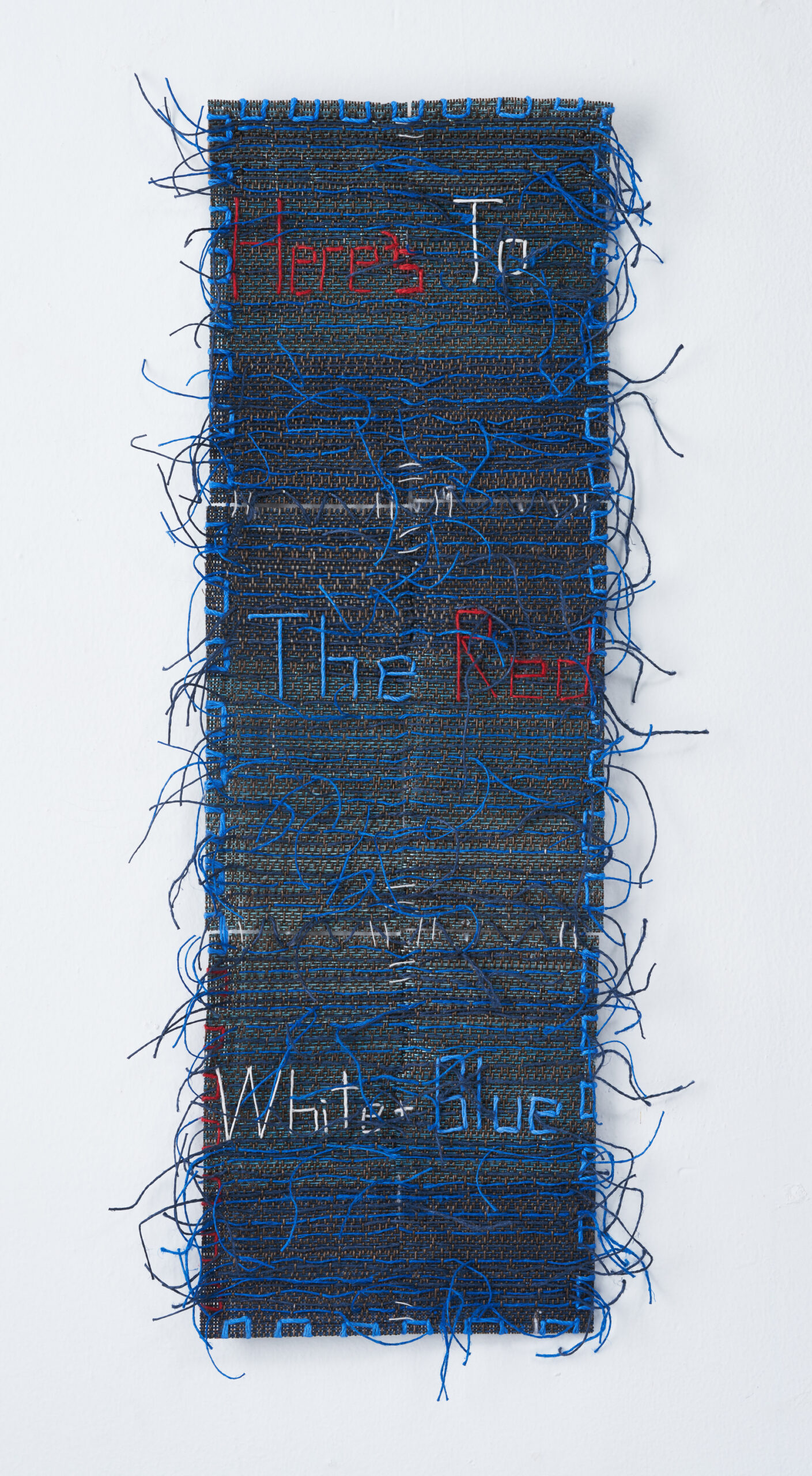
I will be showing a work that has not yet been exhibited publicly:
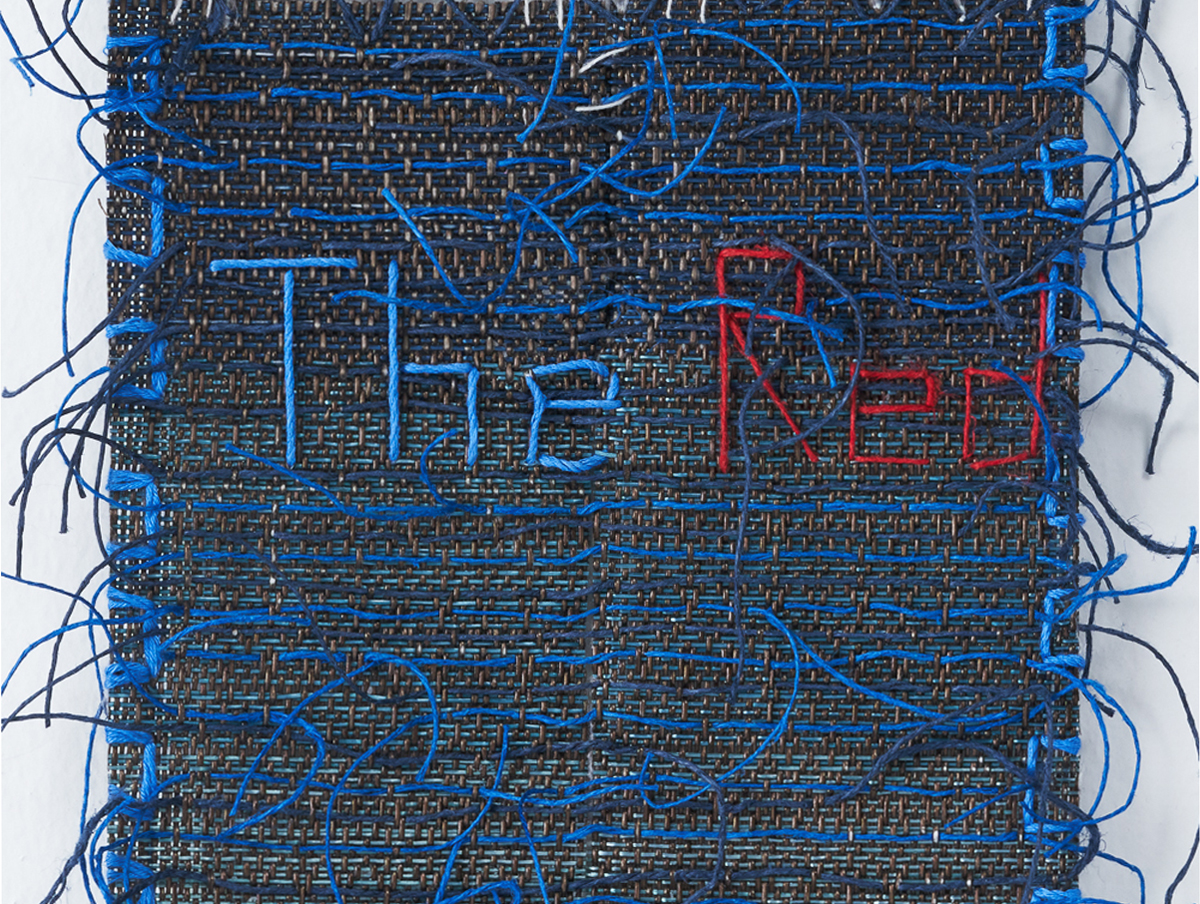
Blue Tapestry (Here’s To The Red, White + Blue), 2021, 18.75 x 6.5″
a hanging textile work made of hemp cord, linen thread and repurposed plastic placemat material. 
This work is part of a three piece series, which also includes “Red Notebook” and “White Album”, created in response to the re-evaluation of our national identity provoked by recent and historical events and conditions, and resulting turmoil.

VIEW THE SHOW VIDEO!
EXHIBITIONISTA: “String Theory” at the Cultural Center of Cape Cod
I am thrilled to participate in:
“String Theory” at the Cultural Center of Cape Cod

Opening Reception Friday, February 9, 5–7pm
Exploring the possibilities within fiber art to showcase the beauty and versatility of the medium.